In the AV industry (especially interactive touchscreens), sustainability and regulatory compliance require manufacturers to display both formal conformity marks and consumer-facing environmental symbols. Below is a structured guide to the most relevant markings: what they mean, where they apply and how they should be used.
Energy Star
Energy star is not mandatory to bring a product to market. It is a voluntary third-party certification program that identifies products meeting strict energy efficiency guidelines set by the U.S. Environmental Protection Agency. Products with the ENERGY STAR label help you save energy, reduce costs, and lower environmental impact.
Our Aspen 4 and Elm 2 displays as our legacy displays, are Energy Star certified.
Type approval
These markings show that a touchscreen meets the essential legal and technical requirements for being placed on the market in different regions. They cover safety, electromagnetic compatibility and overall compliance with regional regulations, ensuring that products can be sold and used legally.
CE
Shows that a product meets EU safety, health and environmental protection standards. It is mandatory for products sold in the European Economic Area.
FCC
Required for electronic products sold in the United States, showing that they comply with limits for electromagnetic interference and radio frequency emissions.
UKCA
Shows that a product meets UK safety, health, and environmental protection standards. It is (or will be) mandatory for many products sold in Great Britain. However, for a defined set of product regulations, manufacturers can continue to use either UKCA or CE marking for placing goods on the GB market.

EU Ecodesign
If a product meets EU Ecodesign requirements for energy-related products, it is EU Ecodesign compliant. The EU Ecodesign directive rules set minimum standards for energy efficiency, standby power use and environmental performance to reduce overall lifecycle impact.
EU Ecodesign compliancy does not have a single official logo. Manufacturers often use variant icons or text labels (for example “Ecodesign compliant”).
Substance management
These markings restrict or control the use of certain substances in electronic equipment. They help protect human health and the environment by limiting hazardous materials and ensuring transparency about chemicals used in products.
These do not have a single official logo. Manufacturers often use variant icons or text labels (e.g. “RoHS Compliant”).
POPs
Restricts the use of persistent organic pollutants —chemicals that remain in the environment for a long time and can accumulate in living organisms— helping to protect human health and reduce environmental harm. In AV, this often targets certain brominated flame retardants used in plastics or cabling.
REACH
Restricts the use of chemical substances that may harm human health or the environment. Products must comply with REACH requirements if they contain substances of very high concern.
RoHS
Restricts the use of specific hazardous substances (like lead, mercury, cadmium, hexavalent chromium, certain flame retardants) in electrical and electronic equipment, helping to make products safer for people and the environment.
Consumer-facing environmental labels
These symbols guide users in how to handle, recycle or dispose of products and packaging responsibly. They highlight energy efficiency, end-of-life treatment and opportunities to reduce environmental impact.
Energy label
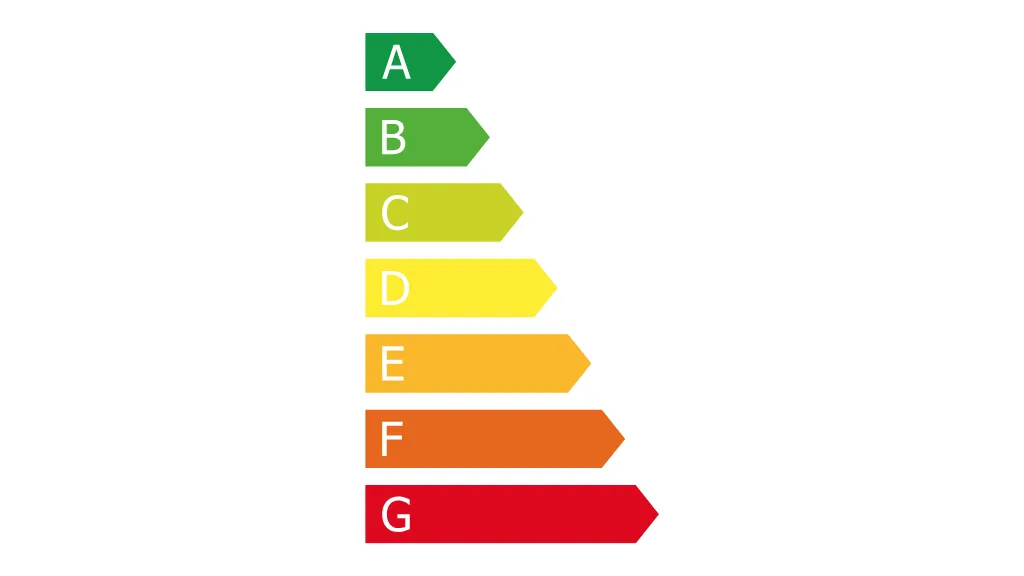
Provides information on the energy efficiency of a product, making it easier to compare performance and running costs. This label is not mandatory for touchscreens.
WEEE
Indicates that a product should not be disposed of with household waste. It must be collected separately and sent for proper recycling.

Recycling
Indicates that packaging or product parts can be recycled.